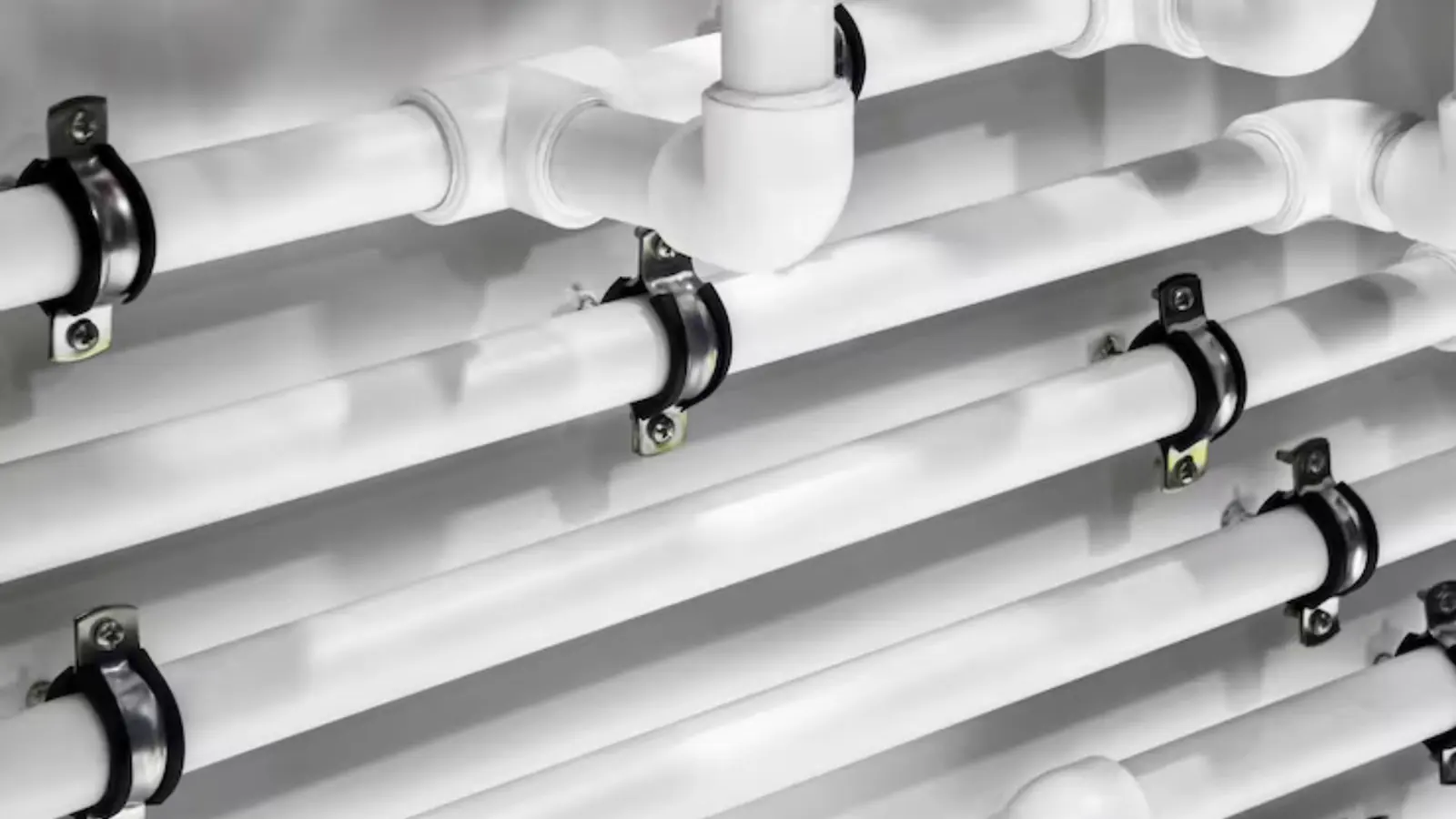
Where PVC is used in a house
| Use | PVC fit | Notes |
|---|---|---|
| Drain, waste and vent (DWV) lines | Common | Typically allowed where the plumbing code table permits it. |
| Hot water supply | No | PVC softens with heat, so hot lines use copper, CPVC or PEX. |
| Cold water supply | Sometimes | Only where the code and the product listing allow. |
| Irrigation lines | Common | Separate from the potable system. |
| Gas lines | No | PVC is not used for gas piping in homes. |
| Sump and sewage ejector discharge | Common | Schedule 40 is typical. |
Use pipe and fittings that match, and make sure the markings show the size, schedule and standard.
PVC schedules and sizes
PVC comes in schedule numbers. Schedule 40 is the standard wall thickness for residential drains and many irrigation lines. Schedule 80 has a thicker wall and is used where pressure or strength is higher. The two are not the same size on the inside, so fittings must match the pipe.
Common DWV sizes are 1 1/2 inch for sink traps, 2 inch for showers and washers, 3 inch for toilets and 4 inch for main lines. The code decides the minimum for each fixture. Using a smaller pipe than the code requires leads to slow drains and failed inspections.
How PVC is joined
Cut square
Use a PVC cutter or fine saw. Square cuts seal best.
Deburr and bevel
Remove burrs inside and out and lightly bevel the end.
Dry fit
Fit the parts together and mark alignment lines.
Apply primer
Primer cleans and softens the pipe so the cement bonds.
Apply cement
Coat the pipe and the socket and push the parts together with a quarter turn.
Hold and cure
Hold for several seconds. Let the joint cure before testing.
Slope, support and venting matter as much as the glue
A drain line works because gravity moves water along it. Horizontal drains need a steady slope, usually a quarter inch per foot for small pipe. Too little slope leaves solids behind. Too much slope lets water outrun waste. Supports every few feet keep the line from sagging and creating a belly where water pools.
Every trap needs a vent to let air in behind the water. A drain without a vent gurgles, drains slowly and can siphon traps dry. The vent must rise above the trap arm before turning horizontal. These rules are the reasons code inspections exist, and why DIY jobs that look right at the joint still fail at the rough inspection.
Want a plumber to handle it?
Call and a person answers, any hour. You hear the price before any work starts.
Milpitas materials and permit rules
The City of Milpitas requires that plumbing materials comply with the California Plumbing Code material tables, and that products be listed. It requires a plumbing permit to install or replace drain, waste and vent piping, with a rough inspection before walls are closed and a final inspection after. Repairs that do not replace or rearrange pipes are exempt.
That means you can fix a leaking glued joint without a permit, but adding a new bathroom drain or rerouting a vent needs one. If the house is in North San Jose, the City of San Jose has its own plumbing permit pages, summarized on our San Jose service page. For a bigger remodel, see plumbing installation.
Source type: City of Milpitas Office of Building Safety plumbing permit handout.
Common PVC mistakes
- Using PVC on hot waterIt warps and fails. Use copper, CPVC or PEX.
- Skipping primer where requiredThe joint may leak under pressure or load.
- Mixing PVC and ABS without the right cementThe two plastics need a transition cement.
- Gluing wet pipeWet surfaces weaken the bond.
- Not supporting horizontal runsSagging creates a belly that holds water.
- Forgetting a cleanoutA long run without a cleanout is hard to clear later. See drain cleaning.
Fittings you will meet on a DWV job
| Fitting | What it does | Where it goes |
|---|---|---|
| Sanitary tee | Joins a branch drain to a main with a smooth curve | Where a fixture branch meets the stack. |
| Long-sweep 90 | Turns a drain with less resistance than a tight elbow | Horizontal to vertical turns. |
| Wye and 45 | Joins drains at a shallow angle | Branch connections on horizontal runs. |
| Test tee | Lets you plug and fill the line for a test | Near the lowest point of the system. |
| Cleanout adapter and plug | Gives rodding access | At the base of stacks and on long runs. |
| Trap adapter | Joins a trap to the wall drain | Under sinks and lavatories. |
A plain tee laid on its side catches solids, so use a sanitary tee or a wye on horizontal drains.
Test before you cover
Fill a new drain line with water or run an air test before the walls are closed. Look at every joint for a bead of seepage. A joint that weeps under a few feet of water head will fail later under a full stack of waste. Leave the test in place for the inspector, who will want to see it.
Label each run as you go. When the drywall is up, you will want to know which pipe serves which fixture. A few photos with a tape measure in the frame give you a map of the wall that lasts for the life of the house.
When to leave it to a plumber
Small repairs, like replacing a trap or a section of drain under a sink, are easy to do yourself. Anything involving the main line, a new vent or a slab is better left to a plumber, because errors are hard to see and costly to reach. We also know the permit steps and inspection timing, which saves rework.
If your PVC drain keeps backing up, the cause may be root intrusion, a belly or a bad joint. A camera shows it. See sewer camera inspection.
Common Questions
No. PVC softens with heat. Hot lines should be copper, CPVC or PEX.
New or rearranged drain and vent piping does. Repairs that do not replace pipe are exempt.
A 3 inch drain is typical, though the code decides the minimum.
No. CPVC handles hot water and is a different color, usually cream or yellow.
Follow the label. Wait before pressure testing or running water through it.