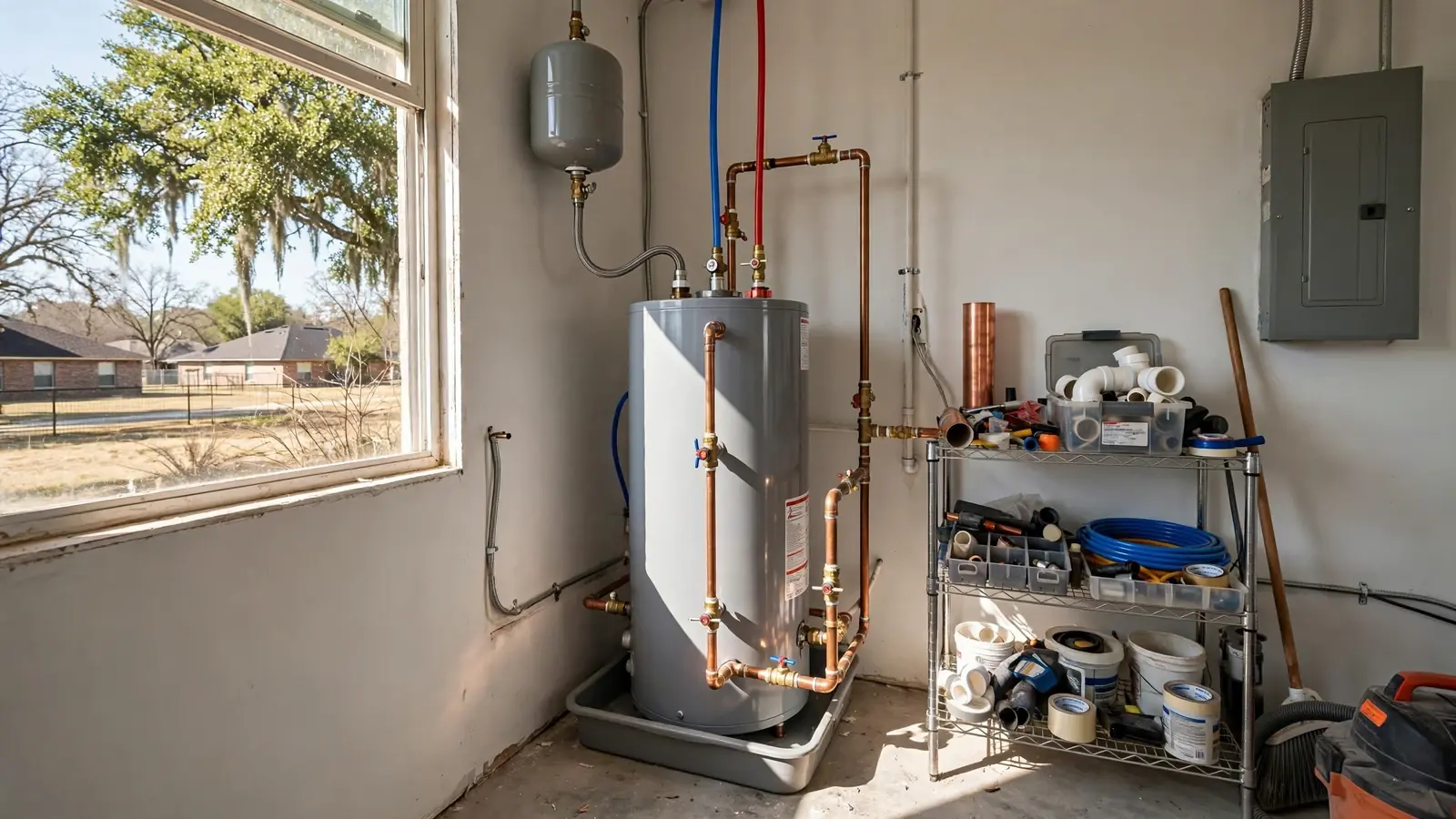
Planning a water heater installation
The first step is sizing. A household of two with one bathroom does fine on a 40-gallon tank, while a family of five with two showers running benefits from 50 or 75 gallons, or from a tankless unit. We ask how many people live in the home and when hot water is used most.
The second step is location. Garage, closet, attic and utility room installations have different requirements for venting, drain pans, T&P discharge and seismic straps. Moving a heater is a plumbing and sometimes electrical or gas job, so it needs a permit.
How an installation moves from call to inspection
Survey
We check space, fuel supply, venting and the water pressure at your home.
Quote and permit
You see the price. The plumbing permit is requested with the owner or authorized agent.
Install
Heater, strapping, expansion tank, pan and discharge piping are installed.
Final inspection
The city inspects the finished work after the install is complete.
Garage, closet or attic: what changes
| Location | Main concern | What we check |
|---|---|---|
| Garage | Vehicle impact, flammable vapors | Heater height or protection and a sediment trap on gas. |
| Hall closet | Venting and access for service | Direct vent or combustion air and a drain pan. |
| Attic | Leak damage to ceilings below | Full drain pan and a pan drain routed to an approved location. |
| Exterior closet | Freezing is rare here, but wind and rain matter | Weather-tight venting and gas connections. |
Ready to book an installation?
Call to schedule a survey and get a price.
Gas, electric or heat pump
- Gas installationWe check the gas pipe size against the heater's input rating, install a sediment trap and set the vent per the manufacturer's instructions or CPC 509. The city requires a seismic or excess-flow gas shutoff when the gas system is altered.
- Electric installationWe confirm the breaker, wire gauge and element wiring suit the heater's rating. The city says an electrical permit applies if new circuits or outlets are needed.
- Heat pump installationThe unit needs space for airflow, a condensate drain and a 240-volt circuit in most cases. Cool exhaust air is a design consideration for small closets.
Zero-NOx rules and planning your install date
The Bay Area Air Quality Management District says its zero-NOx rule for residential water heaters applies when a heater is replaced, not to working units. Its 2026 amendments moved the compliance date to January 1, 2028, with exemptions for qualifying low-income owners and for properties with major electrical or space limits.
If you are planning an installation around that date, we advise asking about a heat pump model so you do not buy the wrong appliance. See water heater replacement for the emergency path if the old heater fails first.
What changes the price of an installation
We quote before work.
Sources for the installation rules
Planned installs follow the California Plumbing Code, which is based on the Uniform Plumbing Code (UPC). The City of Milpitas Office of Building Safety sets the permit and inspection steps. Air district rules apply to gas models.
Common Questions
A few days is normal for a like-for-like swap. A relocation, a fuel change or a heat pump may take longer to quote and permit.
Often yes. The common constraints are gas pipe size and venting. We check both before quoting. See tankless water heater.
The city says a plumbing permit may be issued only to the building owner or authorized agent. We act as your agent if you authorize it.
Most are done in a day. A relocation with new venting or an electrical circuit can take two days.
A rough guide is 40 gallons for one to two people, 50 for three to four and 75 for larger households. We refine it with your actual hot water use.