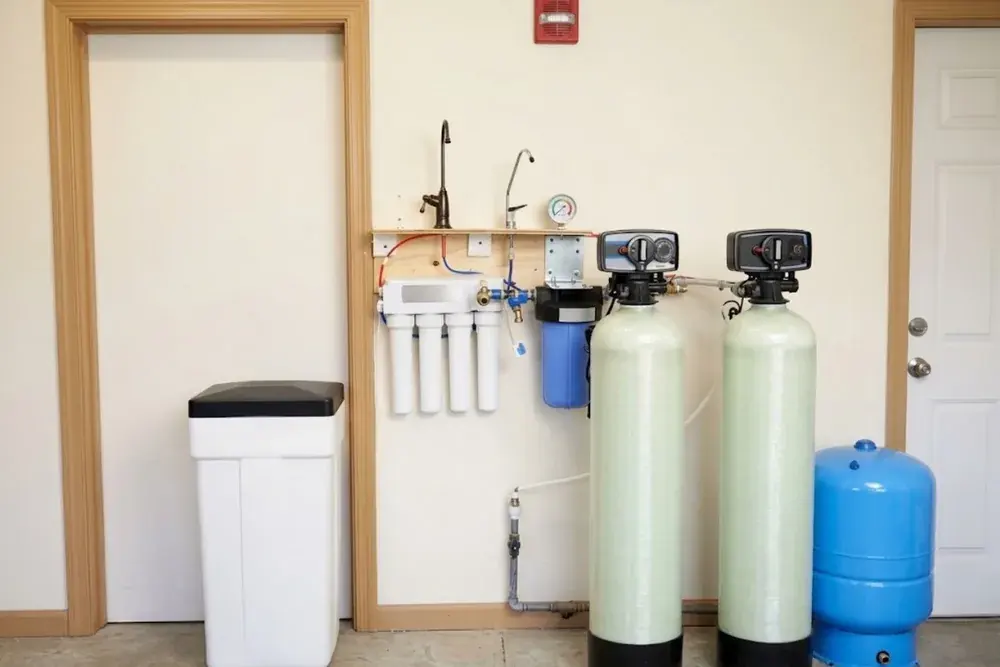
How an RO system works
Water passes first through a sediment filter and a carbon filter, which protect the membrane and take out chlorine. It then flows through the RO membrane, which rejects most dissolved minerals and many contaminants. The clean water goes to a small storage tank, and a dedicated faucet at the sink delivers it. The rejected water carries the concentrated material to the drain.
This is a point-of-use system, which means it treats one tap, usually the kitchen. A whole-house RO system exists, but it is large and expensive and rarely makes sense for a home. Most households do better with an under-sink unit for drinking and cooking water, and a different system for the whole house. See water softener and filtration.
What goes into the cost
We do not publish a number because the final cost depends on your choices. These are the factors that move it.
Cost layers over time
| Layer | When it is paid | What it depends on |
|---|---|---|
| Equipment | At purchase | Brand, stages, certification. |
| Installation | At purchase | Sink type, drain connection, extras. |
| Filter cartridges | Every 6 to 12 months | Water quality and use. |
| Membrane | Every 2 to 5 years | Feed water hardness and chlorine. |
| Water used | Continuous | RO sends some water to the drain. |
| Repairs | As needed | Leaks at fittings, tank pressure. |
Ask the seller for the replacement cartridge cost up front. It is the number that surprises people.
Is RO worth it for Milpitas water
City water in Milpitas meets state drinking water standards. RO is not required for safety, and many homeowners choose it for taste or because they want an extra layer of reduction. If your concern is a specific contaminant, a lab test of your own tap tells you whether RO is the right tool or whether a simpler filter will do.
If your main complaint is white scale on fixtures, RO at one tap will not solve it. Scale is a whole-house problem. A softener or a scale filter treats the whole house. Pairing a softener with an RO unit is common because the softener protects the membrane from hardness.
Want a plumber to handle it?
Call and a person answers, any hour. You hear the price before any work starts.
What the local water report tells you
The City of Milpitas publishes an annual water quality report listing what is found in the supply. It shows hardness that ranges from about 8.4 to 168 ppm, with averages around 57 to 110 ppm depending on the supply. Moderate hardness shortens the life of an RO membrane if it is not pre-treated, so the carbon and sediment stages matter.
Waste water from an RO unit goes to the drain. Because Milpitas homes are on the city sewer, that discharge is small and routine. Your unit should connect through a proper air gap so wastewater cannot back up into the filter.
If you are in North San Jose, ask our San Jose service page for how we serve that side. For a hard-water house, our water treatment page explains how softener and RO work together.
Source type: City of Milpitas annual water quality report.
How to compare quotes fairly
- Same number of stagesA four-stage unit and a six-stage unit are not the same product.
- Same certificationLook for NSF/ANSI 58 for RO units.
- Same tank sizeTank size changes how much water you have at once.
- Install includedAsk whether the drain connection and faucet are included.
- Replacement parts pricedGet a list with the first-year service cost.
- Warranty termsKnow what is covered and for how long.
Hidden costs people forget
Space under the sink is the first one. A tank, a manifold and a drain line take room that a garbage disposal and a cleaning-supply shelf may already be using. Check the cabinet before you buy. The second is the extra faucet, which needs a hole in the sink or countertop.
The third is water pressure. RO units work best with steady pressure, and a house with weak pressure may need a small booster pump. We check the pressure when we visit, so the quote does not change after the unit is on the floor.
A sensible way to decide
Start with the goal. If you want better tasting drinking water, a good carbon filter at the sink may be enough and costs less. If you want reduction of dissolved solids, RO is the tool. If you have scale problems, treat the whole house first.
Ask a plumber to look at your sink and drain before you buy a unit, so the quote reflects the real install. We do that on every visit. Call (510) 544-1962 and we help you pick.
Common Questions
It depends on stages, tank size and the install. We give a single price after seeing your sink, with cartridge costs listed.
Yes, some goes to the drain. Modern units waste less, and a higher-efficiency membrane reduces it.
Cartridges usually every 6 to 12 months and the membrane every few years, depending on use and water quality.
It is not required for safety. Many homeowners choose it for taste or extra reduction.
Some people do. The drain connection and faucet hole are the tricky parts. A plumber can do it in about an hour.